

When fertilizer plants look to expand production, the first major decision point is often not “which specific machine to buy,” but rather “which production route to take.” If the raw materials are pre-formed granules, an NPK blending production line is the pragmatic choice. However, if the raw materials are in powder form—or if the formula contains significant amounts of ingredients like urea that are prone to deliquescence (absorbing moisture and liquefying)—a dry extrusion route centered on a double-roller press granulator is virtually unavoidable. These two routes differ vastly in equipment configuration, energy consumption profiles, and operational scope; the following three-dimensional comparison provides a reference for the selection process.
Batching precision is the lifeline of a blending line. Typical NPK bulk blending machines utilize a static weighing structure featuring multiple hoppers and a single scale; each raw material is weighed individually before being discharged into a central collection point, keeping the proportioning error generally within ±0.2%. Variable frequency drives (VFDs) control the feeding process—switching between fast and slow feed rates—to ensure weighing accuracy even when the dosage of a specific ingredient is very small. The mixing stage relies on low-speed convective action, achieving a coefficient of variation for mixture uniformity that stays consistently below 5% (with high-end models reaching 2.5%). However, there is an easily overlooked prerequisite: the difference in average particle size between components should ideally be kept within 1 millimeter. Otherwise, vibration during transport can cause secondary segregation, potentially resulting in a significant discrepancy between the actual nutrient content in the bag delivered to the farmer and the original formula specifications.
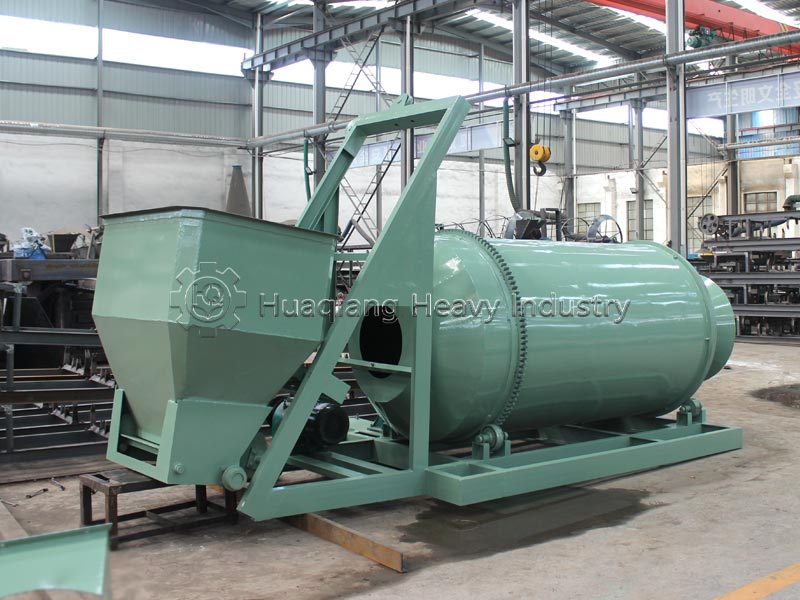
Energy consumption structure is a distinct advantage of double-roller extrusion. The core principle of the fertilizer roller press machine involves two high-strength rollers rotating toward each other, compressing dry powder directly into a dense sheet at ambient temperature, which is subsequently crushed and screened into granules. The entire process requires neither added water nor heat input; raw material moisture content needs only to be maintained between 8% and 12%. This eliminates the need for the drying and cooling systems essential to wet granulation processes, resulting in an overall energy consumption reduction of 30% to 50% compared to wet methods. Take the ZL350 model as an example: it achieves a flaking output of 3.5 tons/hour and a granulation output of 2.2 to 2.5 tons/hour, with granule strength reaching 12 to 24 N, all while the main unit consumes only 25 to 35 kW of power. Electricity consumption is approximately 45 to 50 kWh per ton—a figure far lower than the fuel costs incurred solely during the drying stage of wet granulation processes.
The versatility regarding formulations determines the market niche for each production route. The extrusion process is truly irreplaceable due to its ability to handle “finicky” formulations. High-urea compound fertilizers tend to deliquesce and clump upon contact with moisture, while formulations containing low-melting-point ingredients may melt or gelatinize when exposed to heat; wet granulation and tower granulation methods are ill-equipped to handle such materials. Although extruded granules exhibit natural indentation marks on their cross-sections and lack the perfect sphericity of pan-granulated products, they possess high density and strength, resulting in minimal pulverization during loading, transport, and multi-layer stacking. However, the roller shells are wear parts; their wear status must be inspected every 800 hours, and replacement is mandatory if the groove depth exceeds 2 mm—a hidden cost that is frequently underestimated during equipment selection.