

When planning overseas fertilizer projects, it is essential to distinguish between bulk blending (BB) and roller press granulation processes, as they differ significantly in terms of raw material requirements, final product form, and investment costs. Bulk blending equipment and double-roller press granulators represent two distinct production technologies; they can be installed independently, or a facility can be designed with provisions to switch between these processes based on market demand.
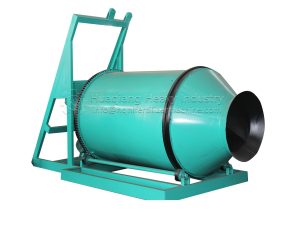
Bulk blending equipment—often referred to in the industry as “BB fertilizer” mixing equipment—serves as the core machinery for NPK bulk blending. In this process, various granular, single-nutrient fertilizers are precisely metered and fed into a mixing chamber, where mechanical agitation ensures a uniform blend. As this is a purely physical mixing process involving no chemical reactions, fertilizer formulations can be adjusted without lengthy downtime, allowing for flexible product switching. A complete NPK bulk blending production line integrates automated batching, conveying, mixing, and packaging. This minimizes the risk of formulation errors associated with manual handling, while the system’s simple structure ensures ease of operation and maintenance—making it ideal for producing a wide variety of fertilizers in small to medium batches.
If the objective is to transform powdered raw materials into high-strength fertilizer granules, a double-roller press granulator (also known as a fertilizer roller press machine) is required. This dry granulation process involves feeding powdered raw materials between two counter-rotating rollers. Under high pressure, the material is compressed and de-aerated to form a solid sheet (or “briquette”), which is subsequently crushed and screened to produce uniform solid granules. This method requires no binders or drying equipment, resulting in lower energy consumption compared to wet granulation. The resulting granules are highly durable and resistant to breakage, making them well-suited for long-term storage and long-distance transport. This technology is particularly effective for processing organic-inorganic compound fertilizers and powdered NPK raw materials.
These two processes are designed to address different market requirements. NPK blending production lines involve the direct mixing of finished granules, offering a rapid path to operation and a lower investment threshold. In contrast, roller-compaction granulation equipment re-processes powdered raw materials into granules, resulting in higher granule strength and a reduced risk of nutrient segregation. Fertilizer manufacturers can choose the approach that best aligns with local market preferences, the physical form of their raw materials, and their project budget.
The layout of the entire production system can be customized based on the dimensions of the client’s facility and the target production capacity, making it suitable for both the construction of new fertilizer plants and the retrofitting of existing production lines. This flexible process configuration enables manufacturers to simultaneously develop both blended fertilizer and compacted granular fertilizer operations, thereby diversifying their product lines and enhancing the overall resilience of the project against market risks.