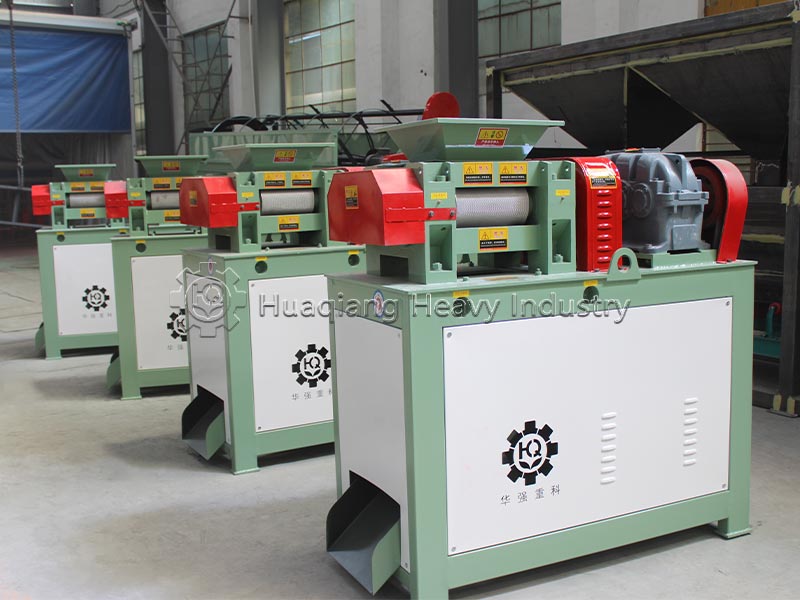

The service life of roller shells in double roller press granulators depends primarily on the shell material, the raw materials being processed, and daily maintenance; significant differences exist depending on operating conditions. Wear rates vary drastically between processing dry inorganic NPK fertilizers and high-moisture organic fertilizers.
When processing dry inorganic materials such as urea, ammonium phosphate, and potash, the low moisture and low viscosity mean materials do not easily adhere to the roller grooves, resulting in a gradual wear rate. Standard high-manganese steel shells can last 8 to 12 months in continuous production. Opting for thickened shells made of high-chromium alloy with wear-resistant surface hard-facing significantly enhances durability; under normal conditions, these can last 2 to 3 years, processing tens of thousands of tons of fertilizer without extensive wear, while maintaining consistent granulation quality.
Conversely, processing decomposed organic fertilizer or organic-inorganic compound fertilizer accelerates shell wear manifold. These materials have high moisture content, high coarse fiber levels, and strong adhesion, causing them to stick persistently to the roller grooves; the cleaning process causes constant friction against the roller surface, and raw materials often contain abrasive impurities like sand, stones, or hard lumps. Standard high-manganese steel shells last only 3 to 6 months; even upgraded, thickened, wear-resistant shells last a maximum of only 8 to 12 months, often developing surface pitting, loose granules, and increased material recycling rates midway through their service life.
Several factors can drastically shorten shell lifespan: failure to remove impurities from raw materials, allowing stones or iron fragments to impact the surface and create dents; uneven feeding, causing one-sided wear; setting the roller gap too narrow, leading to direct dry friction between the shells; and failing to clear adhered material during daily shutdowns, allowing hard lumps to continuously grind against the roller pockets. Diligent daily practices—such as removing iron and impurities, ensuring uniform feeding, properly adjusting the roller gap, and promptly clearing adhered material—can extend the shell’s service life by approximately 30%. Once wear on the roller grooves exceeds one-third and granulation quality deteriorates, the shells require hard-facing repair or complete replacement. Considering overall operation and maintenance costs, double-roller extrusion granulation equipment is not the ideal choice for organic fertilizer production.