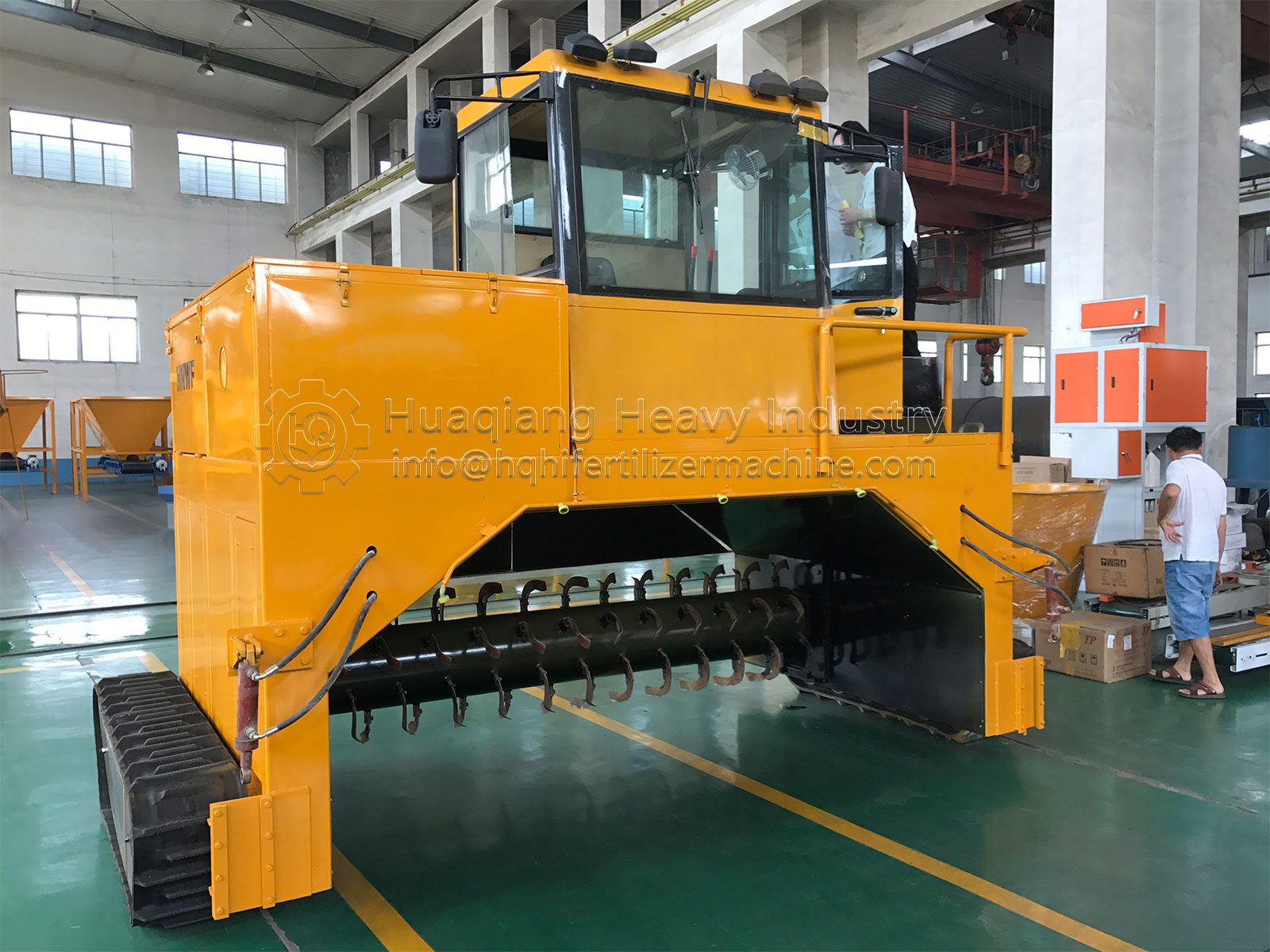

Windrow compost turning machines operate in environments with high dust, high loads, and moist fermenting materials. The walking, turning, and transmission systems experience the fastest wear. The core easily worn parts fall into four categories:
First is the walking track and its accessories. The rubber track directly contacts the ground and the fermenting material. Long-term friction with sand, gravel, and hard clumps in the material easily leads to cracking, delamination, and tooth breakage. The track support rollers and idler rollers continuously roll over the track, causing surface wear and thinning, and the bearings are prone to dust accumulation and jamming. The track tension springs bear constant tension and frequent expansion and contraction, making them prone to fatigue and breakage; this is one of the most frequently replaced parts.
Second is the turning assembly. The turning teeth on the main shaft directly face the high-temperature fermenting material, experiencing both corrosion and impact wear. The tooth tips wear down quickly, and the roots are prone to breakage. The bolts securing the teeth loosen and strip due to long-term vibration; these are considered regular wear parts. The welded joints of the tooth seats are prone to cracking due to material impact, requiring periodic repair and replacement. The bearings supporting the two ends of the turning roller are easily invaded by dust and moisture, and quickly seize up after lubrication failure, resulting in frequent maintenance.
Thirdly, there are the transmission and drive components. Drive sprockets and chains are exposed to dust, and powder mixes into the chain gaps, forming abrasive particles, causing tooth wear, chain elongation, and skipped teeth. The oil seals at the reducer output end and the main shaft seals age and leak grease due to long-term heat exposure. The rubber shock absorbers in the drive system, constantly buffering vibrations, are prone to aging, cracking, and failure.
Fourthly, there are auxiliary wear parts. Various dustproof seals and grease fittings throughout the machine are prone to clogging and failure; the scraper blades wear quickly due to their close contact with the material pile; the guide blocks and limit buffer blocks break from long-term impacts; and the seals of the hydraulic press’s oil pipe joints age and leak oil due to heat.
Regular dust removal, timely grease application, and prompt replacement of worn gears and tracks during routine maintenance can significantly extend the service life of all wear parts and reduce downtime for maintenance.