
Q1: Why is a compost turner essential for organic fertilizer production? Can manual turning be used instead?
A: Manual turning is not recommended. Organic fertilizer fermentation requires continuous aeration, cooling, moisture removal, and odor elimination. Manual turning lacks sufficient depth and uniformity, often leading to anaerobic fermentation, blackened and foul-smelling material, incomplete decomposition, and unevenly composted clumps. Professional compost turners enable deep turning, uniform mixing, and rapid cooling and aeration; they significantly shorten the fermentation cycle and ensure the fertilizer is fully decomposed and nutrient-stable, making them indispensable equipment for large-scale production.
Q2: What types of compost turners are available on the market, and where is each type best suited?
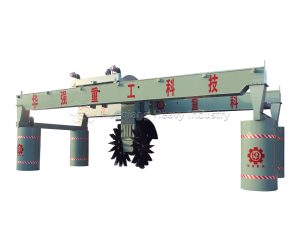
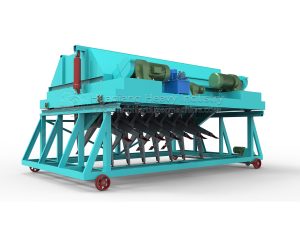
A: There are three mainstream types, each suited to different facility setups: ① Groove-type (or Channel-type) turner: Suitable for fixed fermentation channels; offers organized layouts, enclosed odor control, and high automation—ideal for medium-to-large standardized plants. ② Wheeled mobile turner: Requires no fixed channels; allows for flexible material piling in open areas; offers high mobility and low investment costs—ideal for small startups. ③ Windrow compost turning machine: Features strong climbing ability, a large ground contact area, and minimal material compaction; suitable for soft ground and large-scale open-air fermentation—offering the greatest versatility.
Q3: Which compost turner should a newcomer choose? Which offers the best value for money?
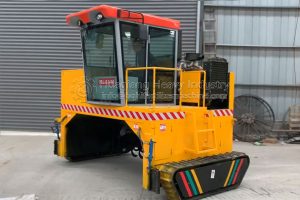
A: For small-scale plants, sites without fixed layouts, or limited budgets, the mobile crawler-type turner is the best choice; it requires no civil engineering for channels, is ready to use upon arrival, allows for flexible relocation, and entails the lowest investment cost. For standardized plants aiming for long-term, large-scale production and high standards of cleanliness and environmental compliance, the groove-type turner is preferred; it offers high automation, more consistent fermentation results, and facilitates centralized odor control.
Q4: What are the key parameters to consider when choosing a compost turner?
A: Focus on four core factors that directly determine fermentation efficiency: ① Turning depth and width (determines processing capacity per batch); ② Travel speed and drum rotation speed (affects mixing and aeration effectiveness); ③ Machine materials and the wear resistance of the turning teeth (determines service life); ④ Automation features (remote control, variable frequency drive, automatic travel) (reduces the difficulty of manual operation). Parameters are matched to production capacity to avoid the inefficiency of undersized machines struggling with output or oversized machines wasting energy.
Q5: What are the site requirements for a trough-type compost turner?
A: Trough-type systems require the prior construction of fermentation troughs (typically 3–6 meters wide and 1.2–1.8 meters high) with a leveled, hardened floor and rails installed along both sides. Advantages include an organized layout, a controllable fermentation environment, ease of covering for odor control, and compliance with environmental standards. It is ideal for fully licensed, standardized fertilizer plants; multiple troughs can operate in parallel to double production capacity.
Q6: How often does the turner turn the material, and what is the fermentation cycle duration?
A: Standard fermentation process: Turn 1–2 times daily during the high-temperature phase, and once every 2–3 days after the temperature drops and stabilizes. The total fermentation and maturation cycle is 15–25 days. The equipment ensures uniform turning and effective aeration, shortening the cycle while preventing mold, acidification, and odors, and guaranteeing complete maturation.
Q7: What fermentation raw materials can the turner handle? Are there any limitations?
A: It is compatible with the vast majority of organic fertilizer raw materials, including cattle, sheep, chicken, and pig manure, straw mixtures, mushroom residue, traditional Chinese medicine residue, oilseed cake/meal, and fermented sludge. It easily breaks up clumps, mixes in additives, and aerates uniformly. Only materials with extremely high moisture content (slurry-like consistency) require pre-drying or moisture adjustment before turning to prevent clogging the equipment.
Q8: How do I choose between mobile and trough-type turners? What are the key differences?
A: ① Mobile type: No civil engineering or site modification required; flexible mobility; low investment; suitable for startups, sites without fixed locations, and small-scale production. ② Trough type: Requires civil engineering (trough construction); high automation; uniform fermentation; easy environmental compliance; high capacity; suitable for stable, large-scale production and standardized facilities. Choose based on needs: mobile units are preferred for small plants, while trough-type units are the standard for large plants.
Q9: Is daily maintenance of the turner difficult? What are the wear parts?
A: Maintenance is simple, and the failure rate is low. Key wear parts include the wear-resistant turning blades, bearings, and chains; these are inexpensive and easy to replace. Routine maintenance—such as clearing material adhering to the turning drum, lubricating drive components, and checking electrical circuits—can be performed by a single person without interrupting continuous production.
Q10: What are the common pitfalls when purchasing a compost turner?
A: Common mistakes include: ① Focusing solely on price while ignoring turning depth (shallow turning leads to substandard fermentation); ② Blindly choosing a trough-style turner, resulting in wasted civil engineering costs due to site incompatibility; ③ Using poor-quality blade materials, leading to rapid wear and ineffective material turning; and ④ Lacking variable frequency speed control, making the machine unable to handle materials with varying moisture levels. When selecting a model, prioritize matching it to your production capacity, site conditions, and processing requirements, and avoid low-spec equipment with inflated performance claims.