

In the field of fertilizer production, NPK blenders and double-roller extrusion granulators represent two distinct yet highly complementary technological approaches: the former precisely blends pre-formed granules according to a specific formula through physical mixing, while the latter directly transforms powdered raw materials into granules using high pressure. Together, they form a comprehensive equipment system covering the entire process from raw material processing to finished product formulation.
The NPK blender serves as the core mixing unit in a Bulk Blending (BB) fertilizer production line. BB fertilizer production is essentially a purely physical process—mixing pre-granulated straight fertilizers such as urea, diammonium phosphate (DAP), and potassium chloride in specific ratios without involving any chemical reactions. A complete BB fertilizer blending line typically comprises raw material storage and conveying systems, a high-precision batching system, a mixing system, a screening system, and an automatic packaging system. NPK blenders utilize a specialized internal spiral mechanism and a three-dimensional structural design; materials within the U-shaped or cylindrical mixing chamber are gently blended by low-speed rotating paddles or spiral ribbons. Unlike standard mixing equipment, NPK blenders are specifically optimized to address issues such as stratification and segregation that can occur when blending granules of varying densities and sizes. The mixing process is gentle, achieving a coefficient of variation for mixing uniformity of less than 5%. The production line employs centralized PLC control, achieving batching precision of ±0.3% and a mixing time of just 3 to 5 minutes per batch. The entire line operates automatically from batching and mixing to packaging, allowing for flexible and convenient formula switching.
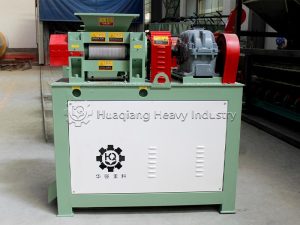
In the realm of granulation, the double-roller extrusion granulator (also known as a fertilizer roller press granulator) represents a mature technological pathway for dry granulation. The core components of this equipment are a pair of high-strength rollers rotating in opposite directions. Powdered material is fed via a quantitative feeder into the wedge-shaped gap between the rollers, where it is compressed into dense sheets or strips of material under high pressure ranging from 50 to 150 MPa. After the compacted material sheets exit the pressure rollers, they undergo crushing, granulation, and screening to yield high-density, high-strength granular products. A key advantage of the twin-roll extrusion granulator is its dry, ambient-temperature process, which requires neither water nor heat. Compared to traditional wet granulation, the roll-compaction granulation line eliminates drying and cooling stages, resulting in lower equipment investment, significantly reduced energy consumption, and zero discharge of waste gas, wastewater, or solid waste. This equipment imposes strict requirements on raw material moisture content, typically necessitating levels below 5%. The production line comprises a pulverizer, feeder, mixer, twin-roll extrusion granulator, screening machine, and packaging machine, with the overall process consisting primarily of three stages: extrusion, crushing, and screening. The resulting granules possess high strength and high bulk density, making them resistant to pulverization during storage and transportation.
From the precise physical blending performed by NPK blenders to the efficient dry-process forming achieved by twin-roll extrusion granulators, these two types of core equipment offer fertilizer manufacturers a comprehensive range of process options—spanning from powder granulation to finished product blending—thereby meeting the market’s diverse demand for differentiated fertilizer products.