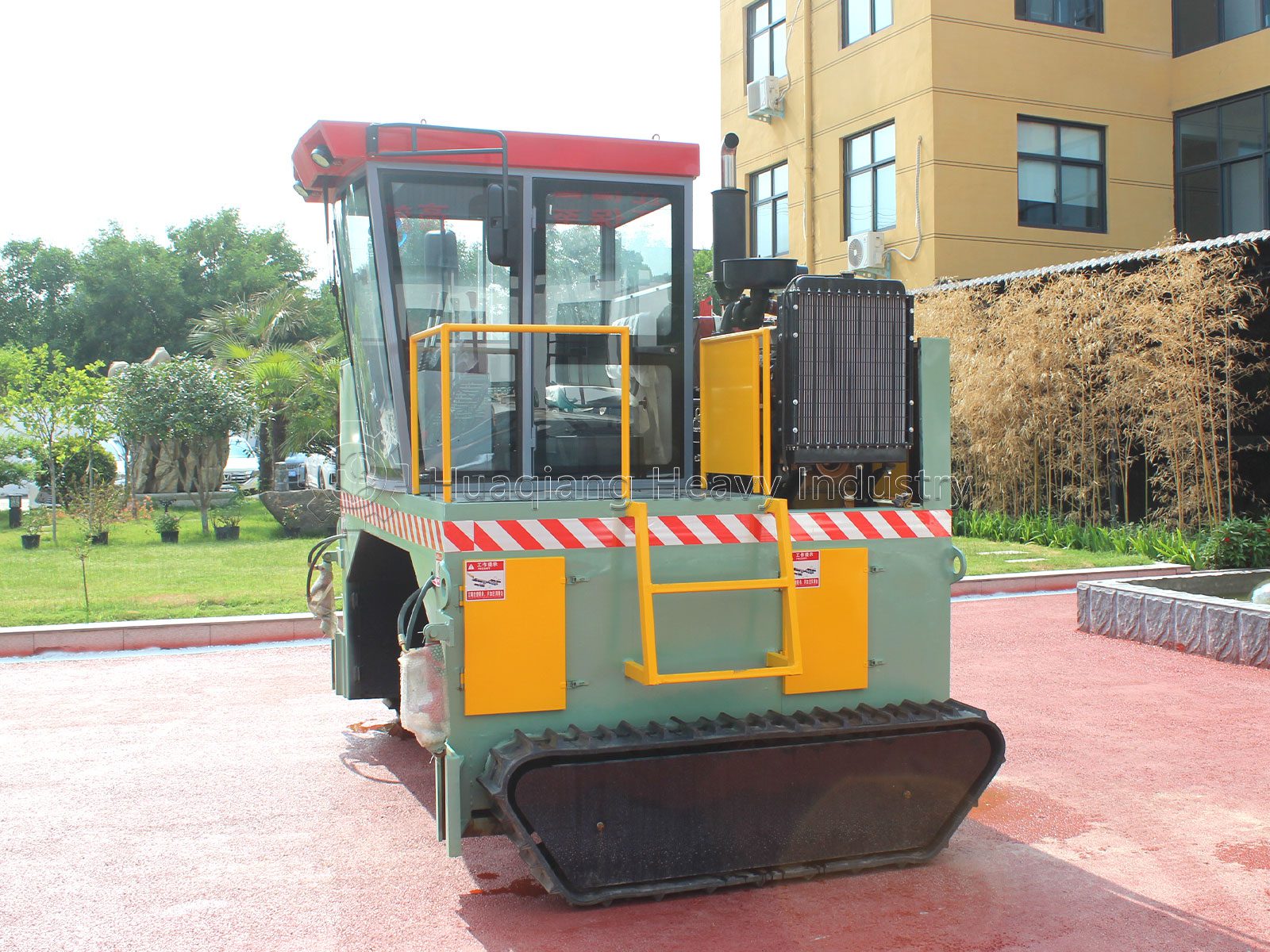

The water tank of the windrow compost turning machine, equipped with a high-pressure water pump and atomizing spray nozzles above the drum, is a standard component of windrow fermentation. It serves four core functions, including fermentation control, dust control, equipment protection, and microbial agent spraying.
First, it precisely regulates the moisture content of the compost pile to ensure aerobic fermentation. When the moisture content of raw materials such as chicken manure, straw, and dry sludge is low (below 25%), water is added simultaneously with turning to adjust the moisture content of the pile to the optimal fermentation range of 30%–38%. In summer, high temperatures cause rapid water loss and localized drying and suffocation. Water is sprayed while turning the pile, ensuring even drying and preventing localized dryness and anaerobic foul odors, significantly shortening the composting cycle. The water tank can also be used to add composting bacteria liquid and liquid nutrients, which are evenly mixed into the materials with the water mist during turning, eliminating the need for manual sprinkling of microbial agents and resulting in more even mixing and improved fermentation efficiency.
Second, it suppresses dust and ash at the work site. Dry material turning and turning easily generates dust. The spray nozzles synchronize with the drum to spray water mist, suppressing dust the moment the material is thrown up, improving the working environment, reducing dust inhalation and raw material loss, and preventing dust from adhering to tracks, bearings, and oil seals, thus reducing the probability of dust-induced wear on parts.
Third, it cleans material adhering to the blades and protects vulnerable parts. Straw and biogas residue are highly sticky and easily clog the turning and turning blades. Water from the water tank can be sprayed on the drum blade shaft during intermittent operation to wash away clumps of sticky fertilizer, preventing overload of the blades, motor stalling, and reducing abnormal wear of the agitator teeth and drum blockage.
Fourth, it provides emergency equipment cooling. In high-temperature summer operations, water stored in the water tank can be used to spray the engine and hydraulic oil pipes to assist in heat dissipation; in the field where there is no external water source, water can be stored on the vehicle and sprayed as needed, eliminating the need for separate water pipes, allowing for flexible operation on irregularly stacked outdoor piles.
Standard models have a water tank capacity of 500-1000L, and a single water storage can meet the water replenishment needs of 2-3 piles of raw materials.